
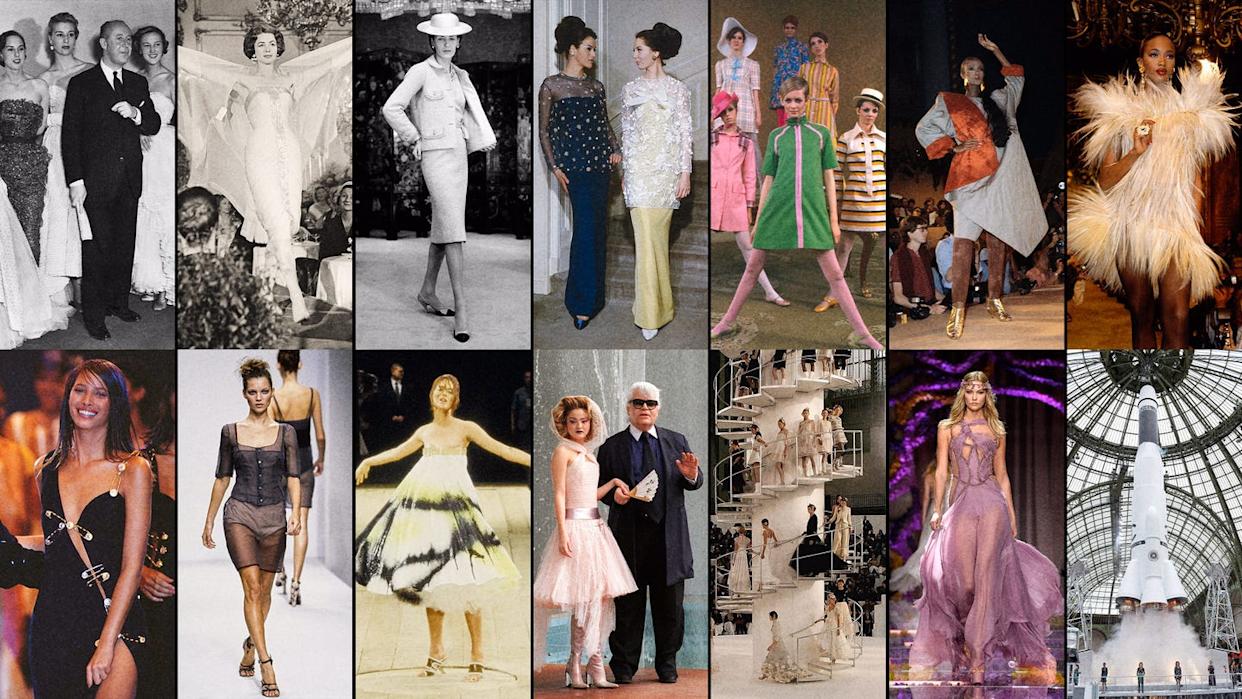
In the age of social media, Fashion Week has transcended its exclusive industry roots to become a global spectacle—where the front row, once reserved solely for discerning editors and buyers, is now streamed instantly to millions worldwide. The runways boast star-studded guest lists, theatrical productions, and a street style scene as influential as the collections themselves. But long before the glow of iPhones lit up the front row, Fashion Week looked strikingly different.
From the groundbreaking debut of New York Fashion Week in 1943 to the intimate elegance of salon presentations in designers’ ateliers, to the supermodel-dominated runways of the 1980s and 1990s, the ever-evolving landscape of Fashion Week not only reflects the changing face of fashion but also the shifting culture it has always mirrored. Ahead, a look back at the evolution of Fashion Week over the last six decades — from New York to Paris and beyond.
1943
A model wears a slit evening gown by Jo Copeland at the first ever New York Fashion Week.
1944
With the end of WWII in sight, service girls get a glimpse of their peace-time fashions with a Spooner and Co. Ltd. runway show full of bridal gowns and evening attire.
1945
Models walk the runway in a mix of evening gowns and tailored daywear as a room of fashion buyers watches on.